How did a small operation in Portland, Oregon grow into a company that builds some of the most challenging projects in the world? Hoffman succeeded by providing the same high level of commitment to every client and by taking a leadership role in the growth and development of the Northwest construction industry.
Young Lee Hoffman comes out west in 1870 to help build covered bridges on the Willamette River. He ends up building much more than he planned, including a successful career in construction and a new family that includes a daughter, Margery, and a son, Lee Hawley.
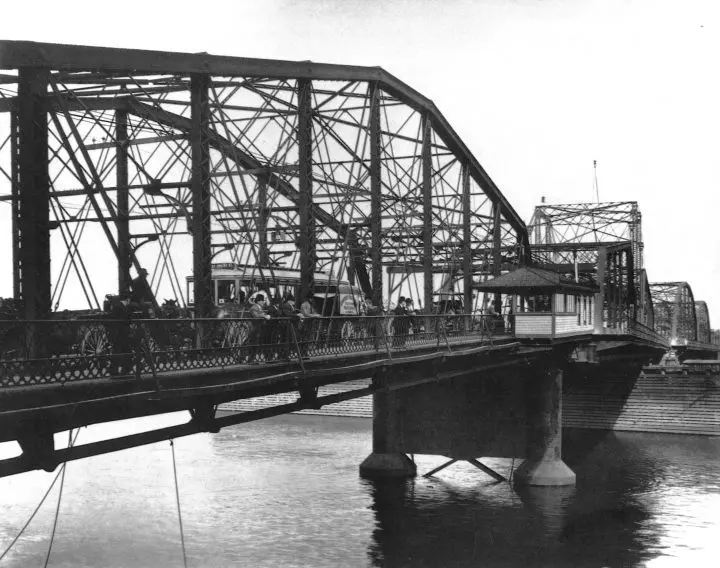
There was a constant stream of humanity crossing the Morrison Street bridge. It is estimated that between 8,000 and 9,000 persons crossed on the structure yesterday.
The Oregonian, April 12, 1887
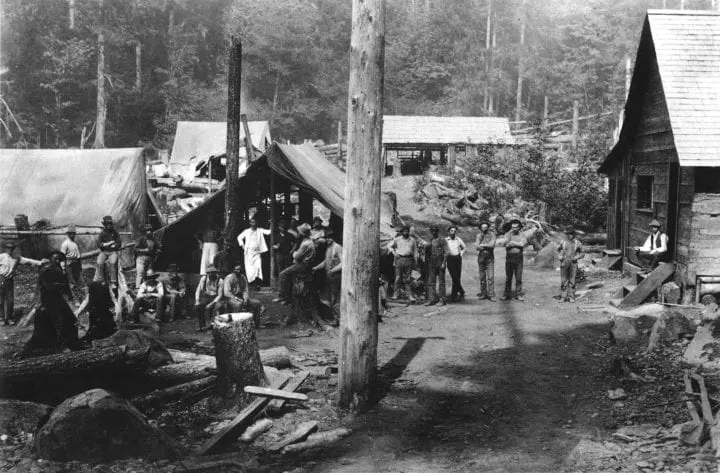
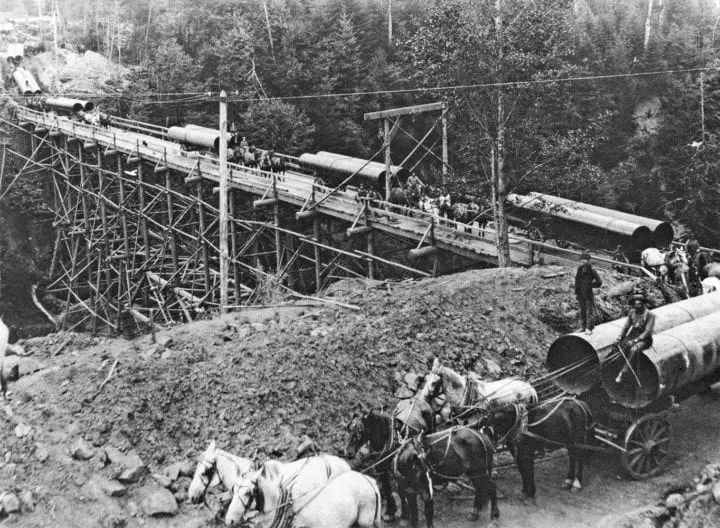
Our earliest work helped deliver clean water to Portland, laying the foundation for Hoffman’s reputation for tackling essential, large-scale infrastructure. (1893 - Construction Camp, Bull Run Pipeline.)
Our earliest work helped deliver clean water to Portland, laying the foundation for Hoffman’s reputation for tackling essential, large-scale infrastructure. (1893 - Construction Camp, Bull Run Pipeline.)
Hoffman’s bridge work transformed Portland’s connection across the Willamette, beginning with the Morrison Street Bridge. (1887 – Morrison Street Bridge.)
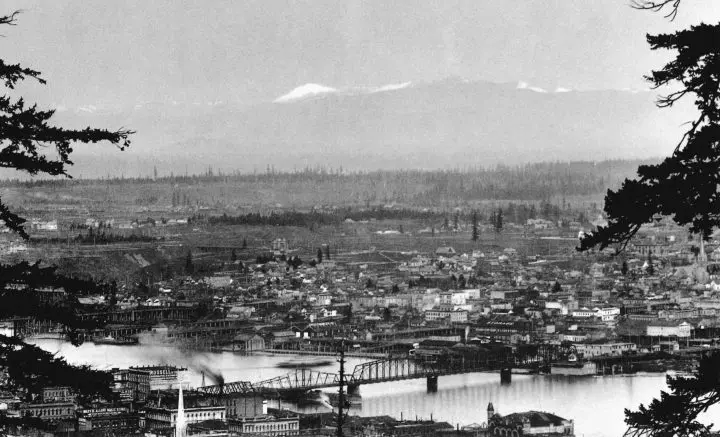
By the end of the 19th century, Hoffman was shaping Portland’s downtown skyline, anchored by landmark bridges and new urban development. (1895 – Downtown Portland and the Morrison Street Bridge.)
1922
The Company is Born
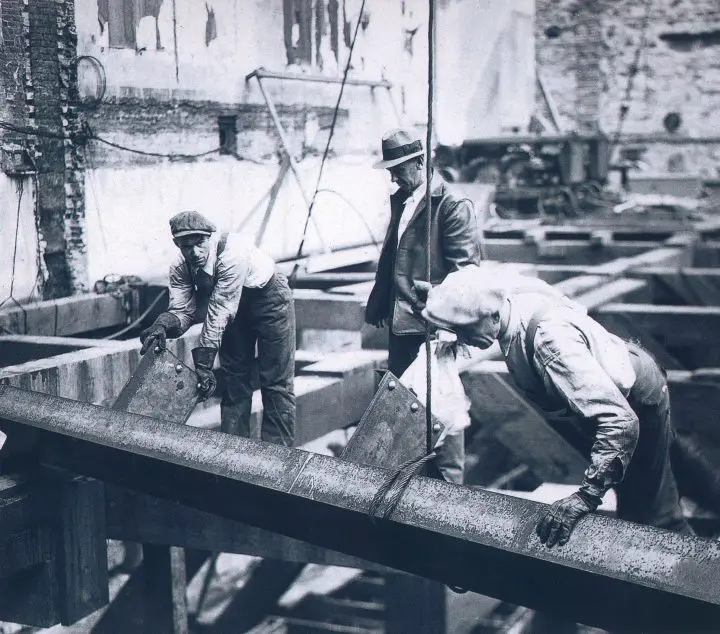
L.H. Hoffman establishes Hoffman Construction Company in 1922, and plays a key role in Portland’s building boom. Noteworthy projects include the Heathman Hotel, the Public Service Building, and the Portland Art Museum.
The Terminal Sales Building demonstrated Hoffman’s early ability to deliver prominent commercial structures in Portland. (1929 – Terminal Sales Building, Portland.)
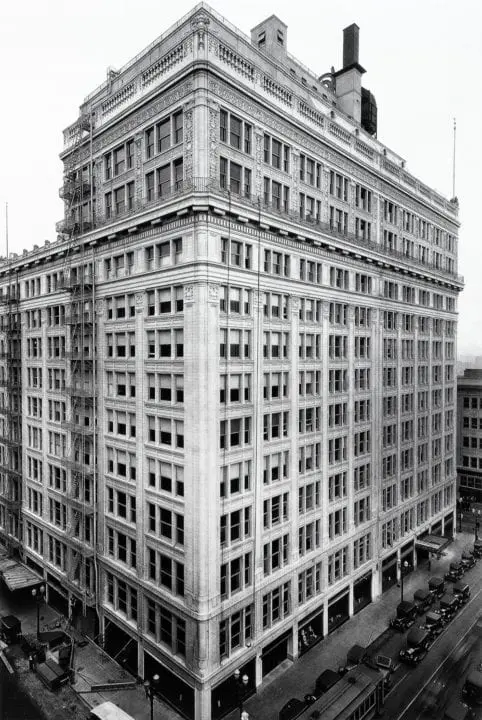
The Meier & Frank expansion became one of Hoffman’s defining early commercial projects, cementing its reputation for quality and scale. (1930 – Meier & Frank Department Store.)
The Meier & Frank expansion became one of Hoffman’s defining early commercial projects, cementing its reputation for quality and scale. (1930 – Meier & Frank Department Store.)
1929
Expansion to Seattle
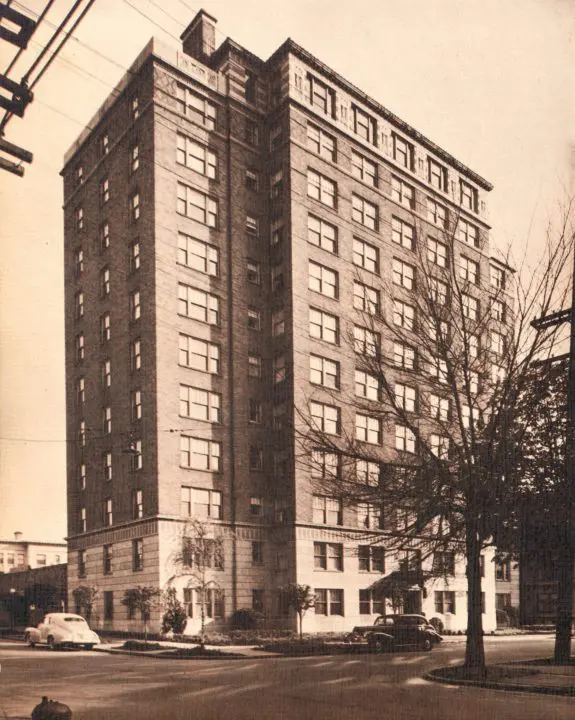
Expanding north during the Great Depression, Hoffman proved it could adapt and succeed in new markets — a commitment that still drives us today. Our first project was a luxury apartment house, a 12-story project on First Hill that set a new standard for apartment living, with amenities such as fireplaces, tiled kitchens and baths, electric clothes dryers, and a separate service elevator. Even then, our commitment to partnering with owners was on display: we completed the project ahead of schedule to help the developer open early to enthusiastic renters.
1929 - 1223 Spring Street - Seattle
1933
The Great Depression
Hoffman stays productive with a series of public projects for federal, state, and county government, including courthouses and post offices throughout the Northwest.
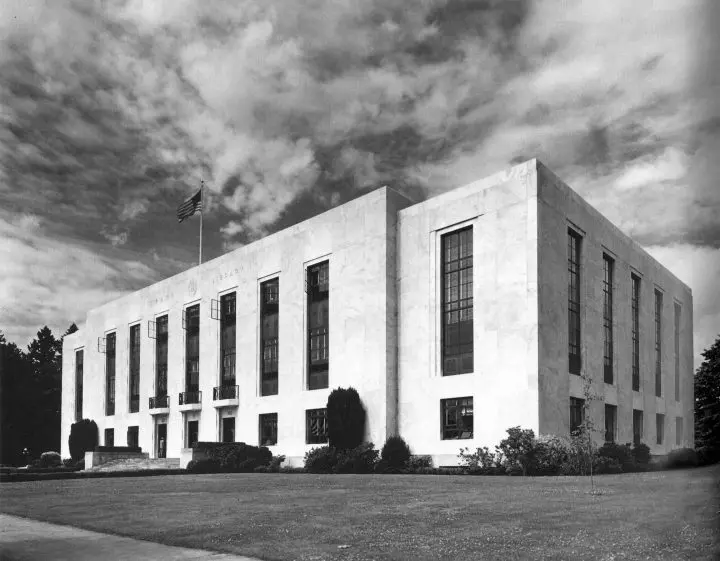
Hoffman helped strengthen Oregon’s institutions with projects like the Oregon State Library. (1938 – Oregon State Library.)
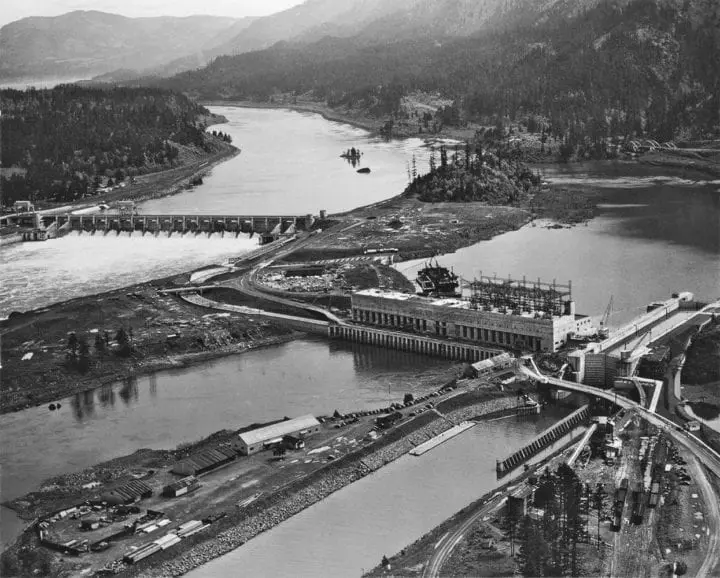
The Bonneville Dam powerhouse reflected Hoffman’s growing role in delivering major public infrastructure. (1939 – Bonneville Dam 2nd Unit Powerhouse.)
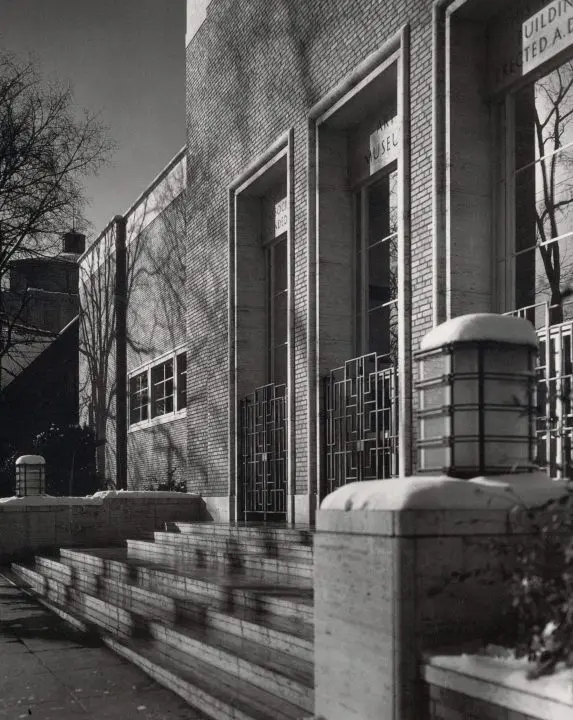
Delivering the Portland Art Museum proved Hoffman’s skill in cultural landmarks that endure through generations. (1939 – Portland Art Museum.)
1948
WWII and Beyond
During World War II, Hoffman supported the war effort through critical shipyard construction, demonstrating our ability to deliver under pressure. The company also moves back to commercial construction and provides strong support for the growth of the Northwest wood products industry.
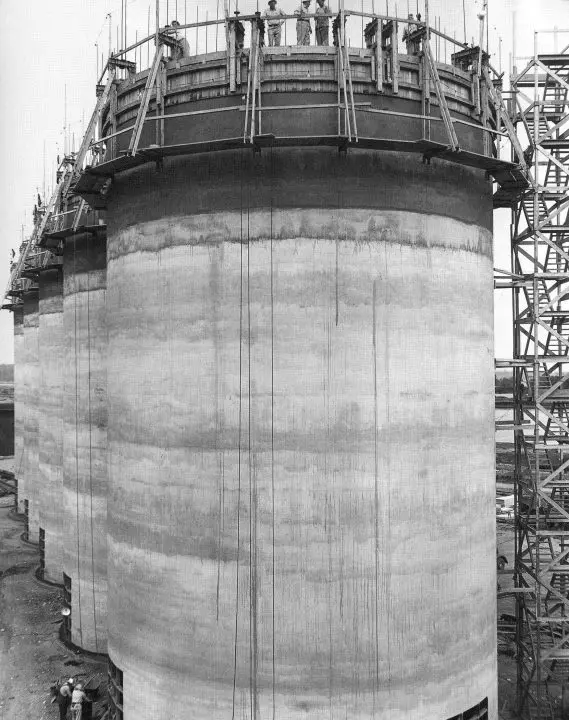
The Weyerhaeuser Pulp Mill highlighted Hoffman’s expertise in large-scale industrial construction. (1952 – Weyerhaeuser Pulp Mill.)
Postwar industrial growth was marked by projects like Nabisco’s bakery, where Hoffman combined technical skill with speed to meet booming demand. (1948 – Nabisco Bakery.)
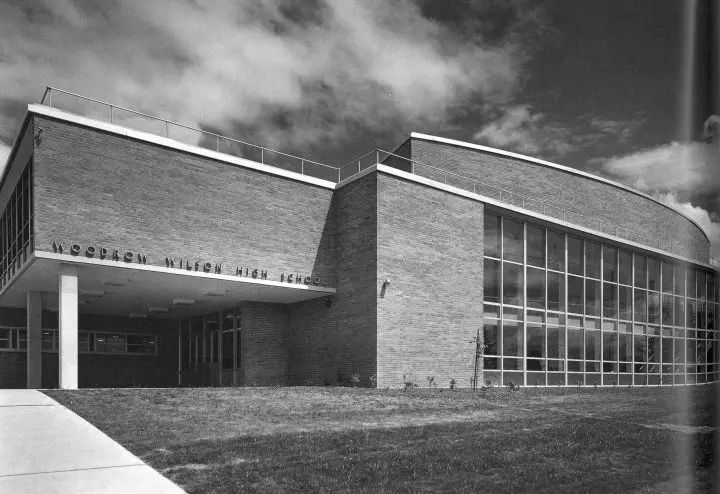
Projects like Ida B. Wells High School demonstrated Hoffman’s enduring role in building the region’s schools and civic spaces. (1956 – Ida B. Wells High School.)
1968
Portland Rises
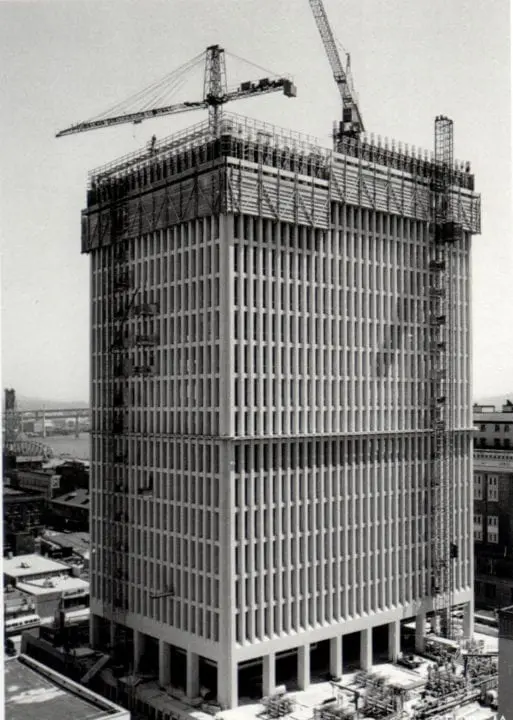
In 1968, Hoffman lands a contract to erect a new corporate headquarters for Georgia-Pacific, a major addition to the Portland skyline since the 1920s.
The Georgia Pacific Building confirmed Hoffman’s place as a major high-rise builder in Portland. (1968 – Georgia Pacific Building.)
The Georgia Pacific Building confirmed Hoffman’s place as a major high-rise builder in Portland. (1968 – Georgia Pacific Building.)
The Memorial Coliseum became a Northwest icon and proved Hoffman could deliver high-profile civic arenas. (1959 – Memorial Coliseum.)
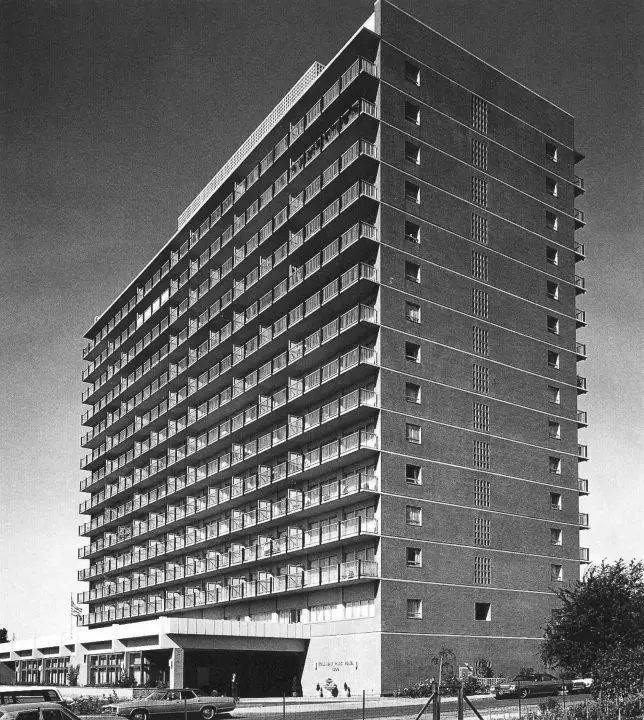
With Holladay Park Plaza, Hoffman expanded into complex residential and senior living facilities. (1966 – Holladay Park Plaza, Portland.)
1973
Old Strengths and New Innovations
Under the leadership of L.H. Hoffman’s son, Eric, and Cecil W. Drinkward, the company takes on a wide array of new challenges. Accuracy, economy, and speed remain Hoffman hallmarks, but new innovations – from tower cranes and concrete pumps to computer scheduling programs – alter the tools of the trade.
Federal office projects in Seattle showed Hoffman’s ability to serve government clients on complex urban jobs. (1974 – Federal Office Building, Seattle.)
1972
Bigger and Better
A succession of large industrial projects demonstrated Hoffman’s ability to handle projects of massive size and complexity. Notable projects include nuclear and coal-fired power plants, a submarine base for the U.S. Navy and the Northwest’s largest cement plant.
The Trojan Nuclear Plant demonstrated Hoffman’s capability to deliver technically demanding energy infrastructure. (1972 – Trojan Nuclear Plant – Turbine.)
Work at the Trident Submarine Base reinforced Hoffman’s reputation for handling secure, high-stakes military projects. (1979 – Trident Submarine Base.)
Work at the Trident Submarine Base reinforced Hoffman’s reputation for handling secure, high-stakes military projects. (1979 – Trident Submarine Base.)
1978
North to Alaska, and Beyond
During the oil boom of the 1970s, Hoffman builds oil field “service modules” in Alaska, along with schools and office buildings. By the dawn of the 1990s, Hoffman had extended its reach north to the Arctic Circle, west to the Aleutian Islands, south to the deserts of New Mexico, and east to New York and Washington, D.C.
By fabricating oil field modules for Prudhoe Bay, Hoffman pioneered modular construction in one of the harshest environments on earth. (1978 – Prudhoe Bay Oil Field Modules.)
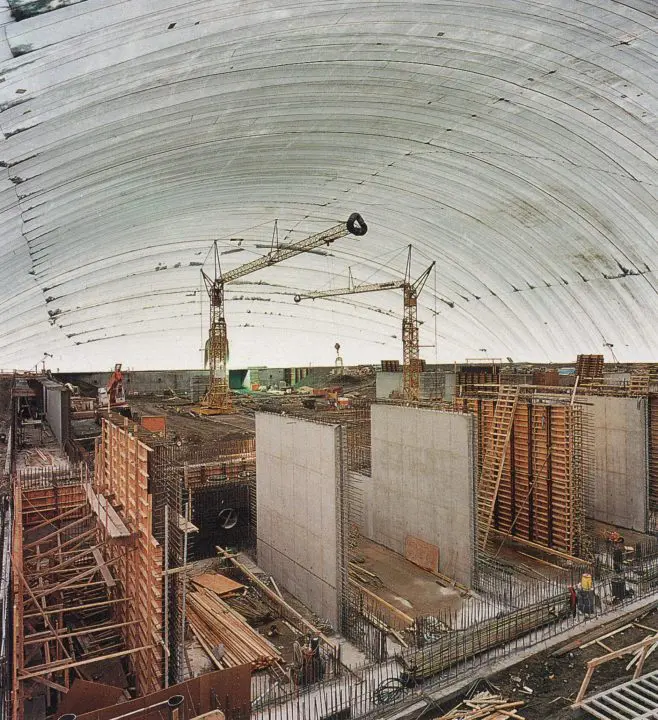
In Alaska, projects like the Eklutna Water Treatment Dome showed Hoffman’s engineering reach across challenging geographies and harsh climates. (1987 – Eklutna Water Treatment – Dome.)
1988
Hoffman Meets High-Tech
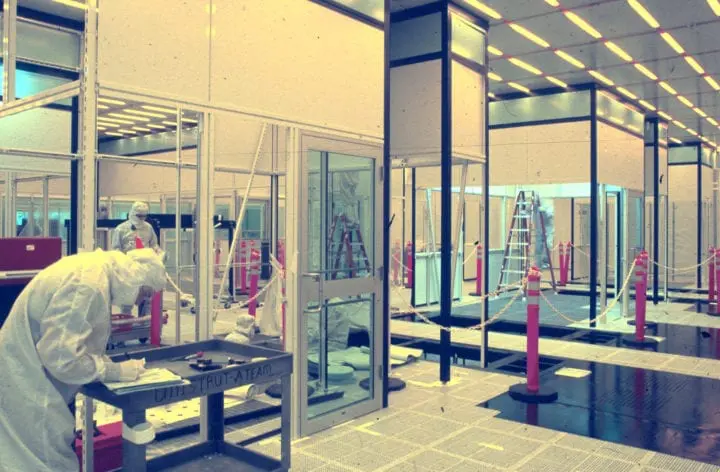
In 1978, a German company selects Hoffman to construct a silicon wafer plant in north Portland. By the end of the 1980s, Hoffman’s expertise with the complex systems and aggressive schedules of high-tech construction is in high demand. The company will ultimately build millions of square feet of manufacturing space for high-technology clients.
Advanced manufacturing projects like Fab D1A marked Hoffman’s entry into semiconductor construction, where precision and innovation are essential. (1992 – Fab D1A )
1990
Reshaping the Portland Skyline
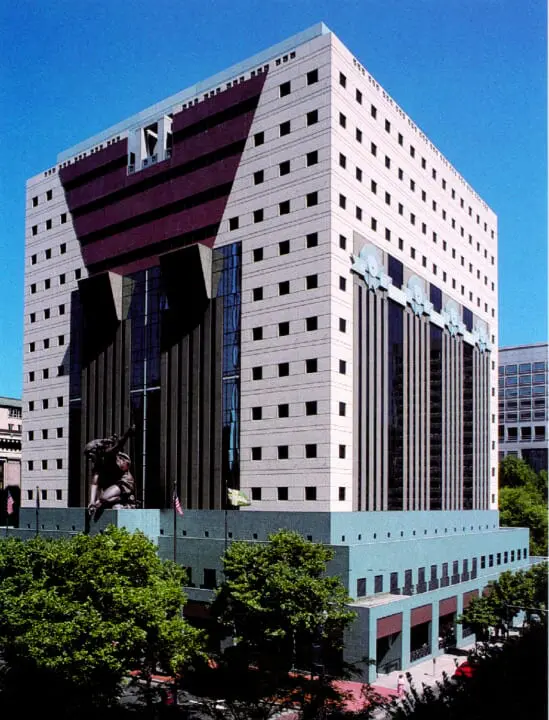
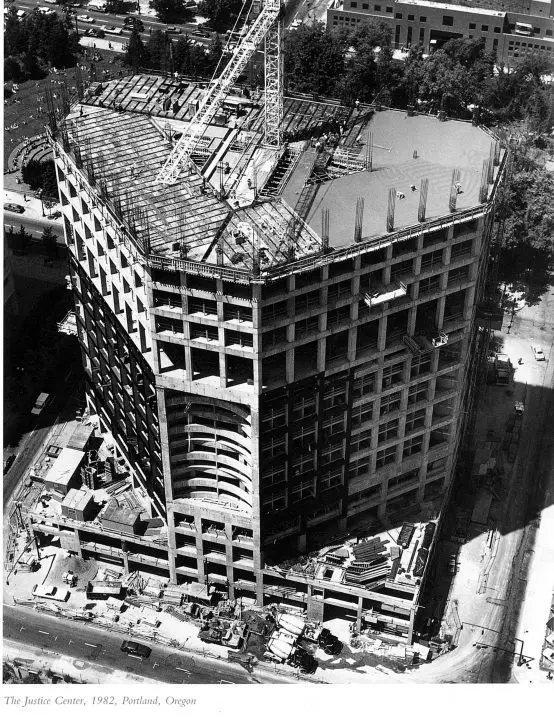
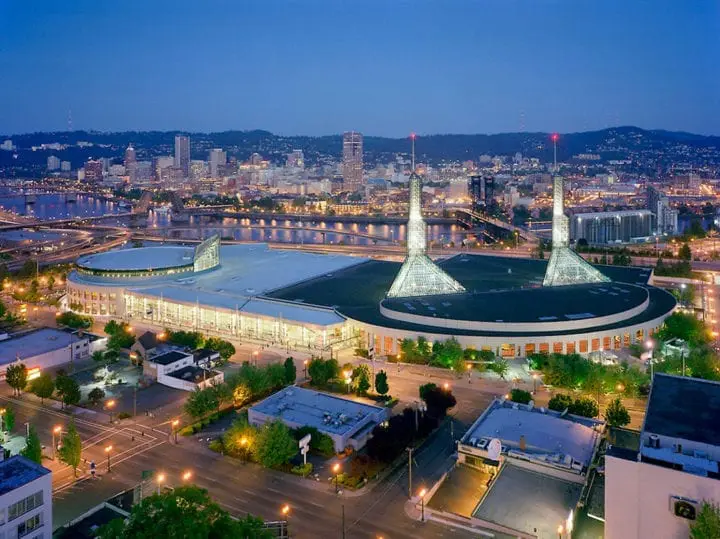
Hoffman plays a decisive role in moving Portland into the future. Projects of major distinction include the Portland Building, the Justice Center, the Portland Center for the Performing Arts, and the Oregon Convention Center.
Hoffman helped redefine Portland’s civic identity with the Portland Building, one of the most distinctive postmodern landmarks in the nation. (1982 – The Portland Building.)
The Justice Center strengthened Portland’s civic core, combining courts, detention, and police functions into a modern downtown hub. (1982 – The Justice Center, Portland.)
With the Oregon Convention Center, Hoffman delivered one of the Northwest’s most recognizable public venues, anchoring Portland’s role as a destination city. (1990 – Oregon Convention Center.)
2000
World-Class Challenges
Hoffman works with some of the world’s top architects, devising new technologies and strategies for one-of-a-kind projects, including interactive museums, elegant libraries, and modern hospitals.
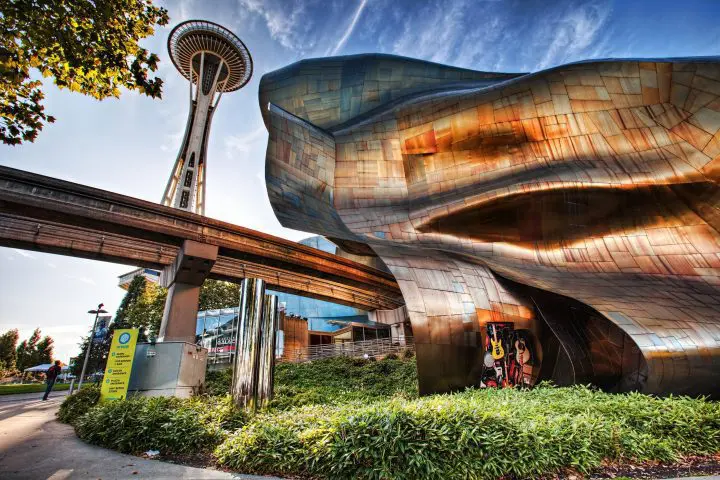
Hoffman partnered with Frank Gehry to deliver the Museum of Pop Culture, an interactive museum whose curved steel and bold colors demanded new construction strategies. (1996 – Museum of Pop Culture.)
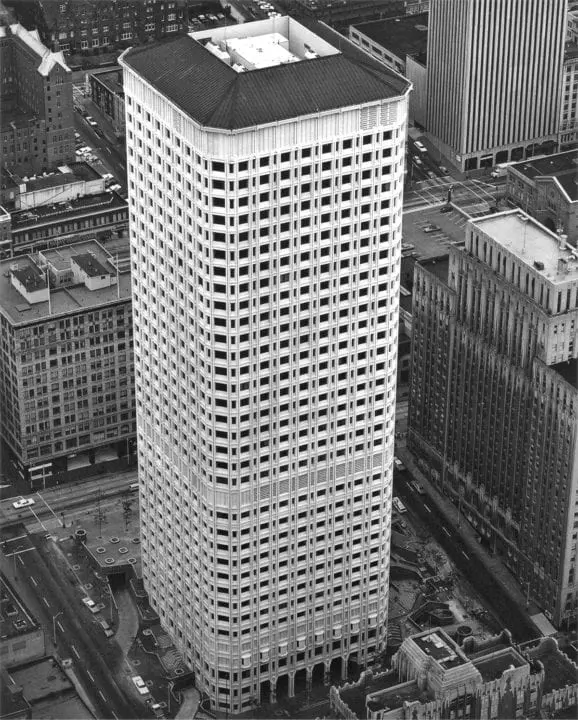
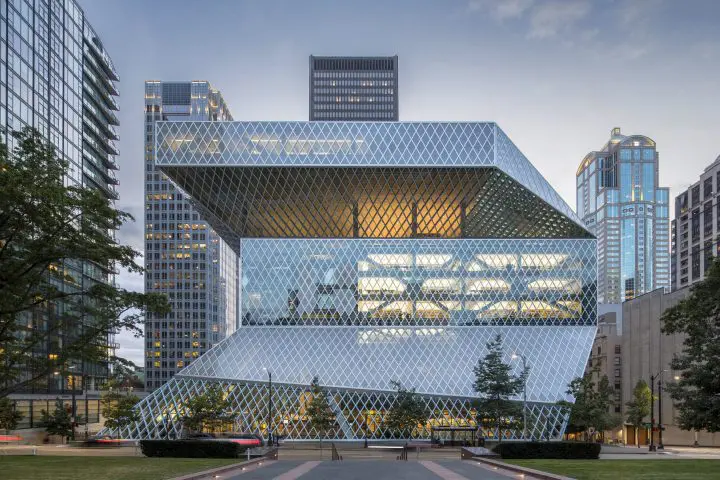
At the Seattle Central Library, Hoffman worked with Rem Koolhaas to realize an elegant, one-of-a-kind civic space that has become an international architectural landmark. (2001 – Seattle Central Library.)
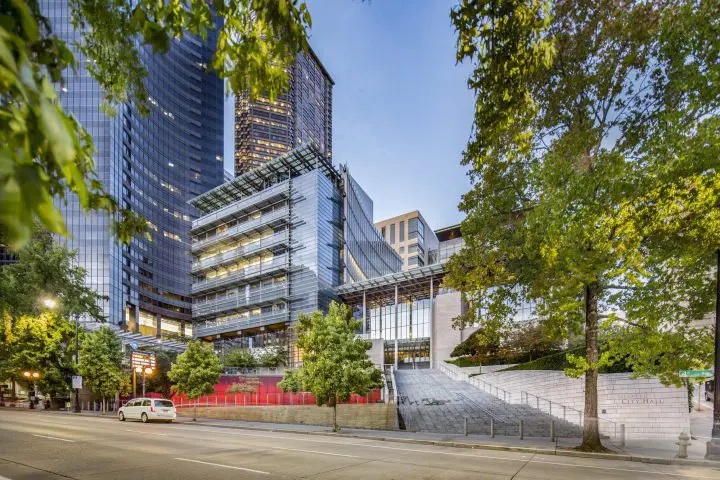
Seattle City Hall showcased Hoffman’s ability to deliver a modern, transparent civic building that reflects the city’s values of accessibility and innovation. (2001 – Seattle City Hall.)
2010s
Portland’s South Waterfront
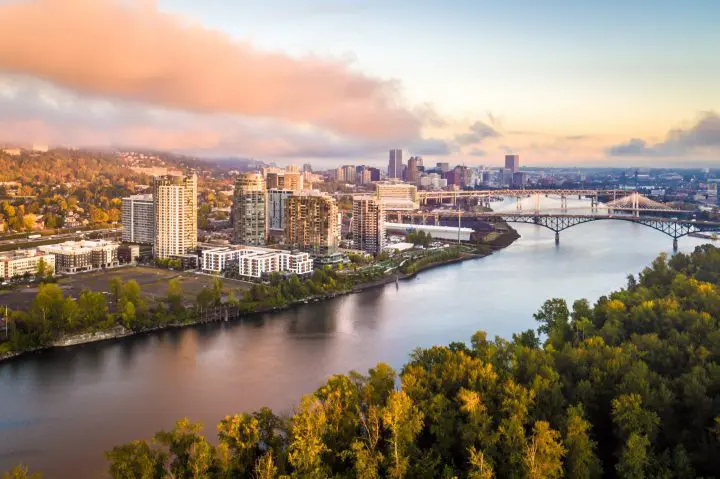
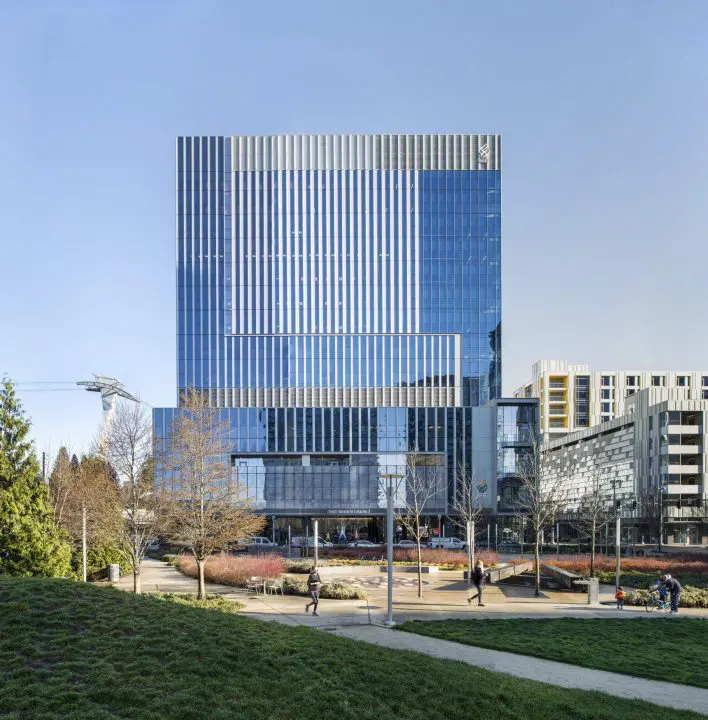
As Portland’s robust growth continues, Hoffman is a key player in the development of new districts and neighborhoods that revitalize the cityscape. The highest profile undertaking is the South Waterfront, a new urban district constructed on a former industrial site on the west bank of the Willamette River. With a value of over $500 million, it is one of the largest urban redevelopment projects in the United States, generating new jobs, housing, open spaces, multi-modal transportation options, research and office space, and destination attractions.
Hoffman played a central role in transforming Portland’s South Waterfront from a former industrial site into one of the largest urban redevelopment projects in the country, a $500 million investment that created jobs, housing, research facilities, and vibrant public spaces. (2015 – South Waterfront Redevelopment.)
As part of the district’s growth, Hoffman delivered the OHSU Center for Health and Healing South, a state-of-the-art medical facility that anchors the neighborhood and expands access to world-class healthcare.
(2019 – OHSU Center for Health and Healing South.)
2020
Landmarks and Legacy
As the 21st century unfolds, Hoffman continues building a legacy of performance excellence. Owners trust us with their most important projects, such as challenging renovations of the Northwest’s best-known landmarks.
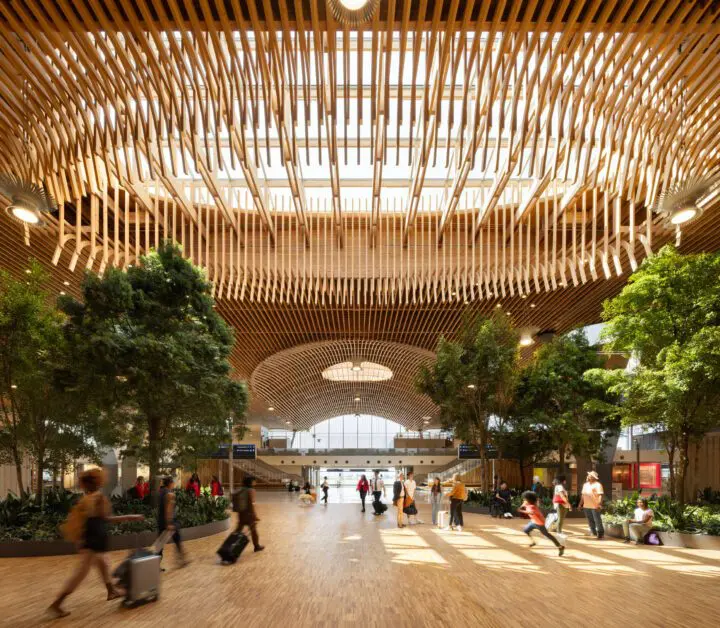
The PDX Terminal Core Redevelopment is the largest project in Portland’s history, where Hoffman is reshaping the region’s gateway with a bold new terminal that will serve generations of travelers.
(2024 – PDX Terminal Core Redevelopment.)
Hoffman modernized Seattle’s most recognizable landmark with the Space Needle Century Project, blending historic preservation with state-of-the-art construction techniques.
(2019 – Space Needle Century Project.)
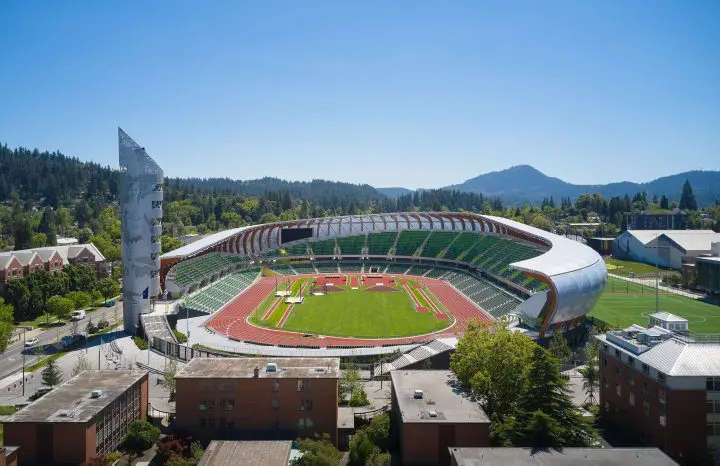
At Hayward Field, Hoffman delivered a world-class track and field venue, reaffirming our reputation for executing technically demanding and nationally significant athletic facilities.
(2021 – Hayward Field.)
The Portland Japanese Garden expansion showcased Hoffman’s craftsmanship and sensitivity, creating one of the most celebrated cultural spaces in the United States.
(2019 – Portland Japanese Garden.)
...
Looking Forward
Hoffman is building the future across a diverse set of markets, from advanced technology and healthcare to water treatment, education, and civic spaces. Owners continue to trust us with projects that demand precision, innovation, and accountability.
We remain focused on what has always set us apart: performance, partnership, and a commitment to safe, high-quality construction.
Looking ahead, Hoffman is poised to continue leading in the most complex and important projects of our time. With the strength of our people and the trust of our partners, we are ready for the future of building.
This is a modal window which overlays the main content of the page indicating something has not loaded correctly.