A Cross-Cultural Commitment to Excellence
Portland Japanese Garden Cultural Village
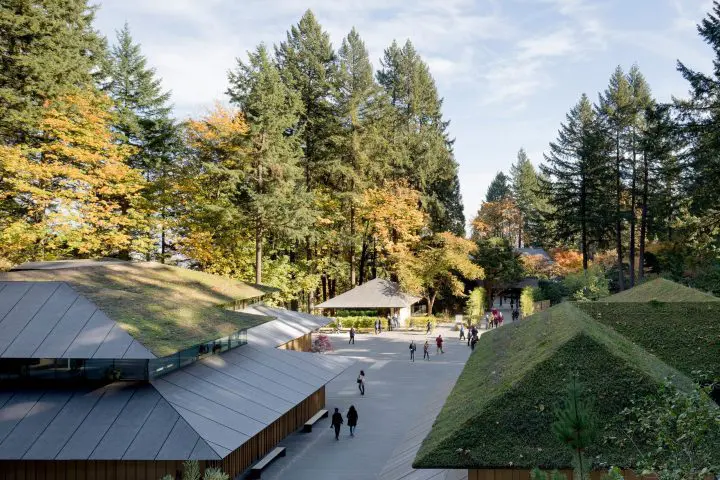
Since it opened in 1967, the Portland Japanese Garden has provided residents and visitors alike with an oasis of serenity and a connection to Japanese ideals and values. Located adjacent to Washington Park in Portland’s west hills, the Garden is considered the finest of its kind outside Japan. In 2015, the Garden partnered with world-renowned Japanese architect Kengo Kuma to expand the facility to accommodate rapid visitor growth, as well as enhance its ability to immerse visitors in Japanese arts and culture. It was the first significant renovation in over fifty years. As part of a highly collaborative team that included local design firm Hacker, Hoffman doubled the size of the Garden and added a series of buildings that support its cultural mission.
Challenge
How do you craft an approach that honors the aesthetics and traditions of Japanese design, construction techniques, and culture?
Solution
From woodwork details and landscaping to owner furnishings, preserving the elements of a traditional Japanese garden and incorporating authentic materials and methods drove every aspect of Hoffman’s project delivery.

Project Story
Craftsmanship and Attention to Detail
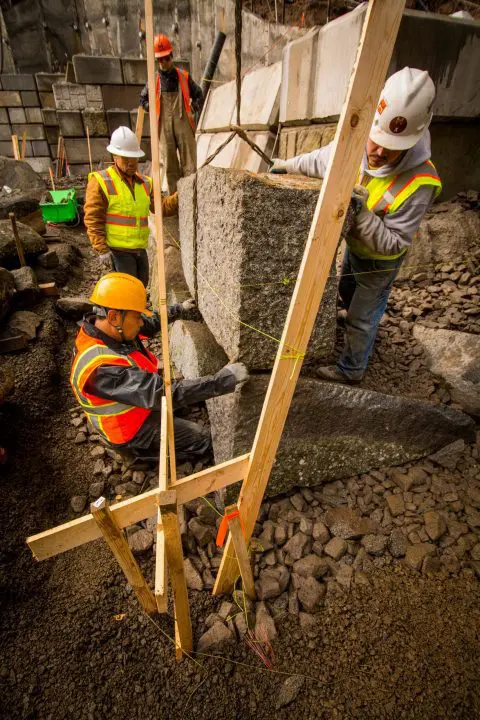
The project was Kengo Kuma’s first U.S. commission. Craftsmanship on the project reflected the Japanese tradition of attention to detail and pursuit of aesthetic beauty. Once the castle wall stones were transported and staged on a lot in Portland, the team began a meticulous process of hand-cutting and shaping the stone into the required shapes and sizes.
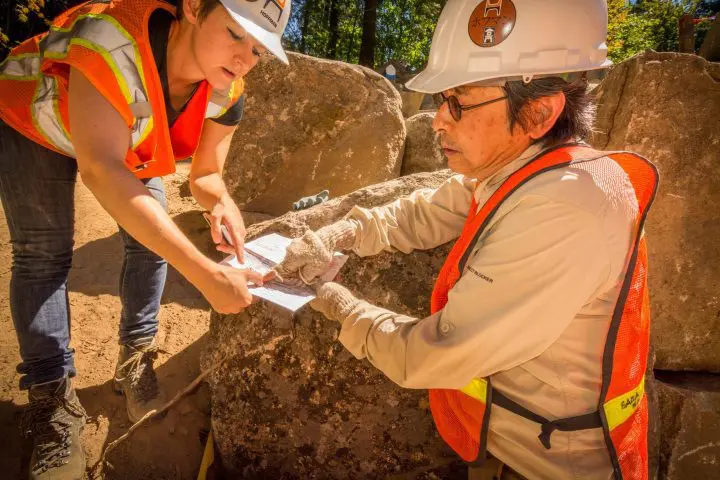
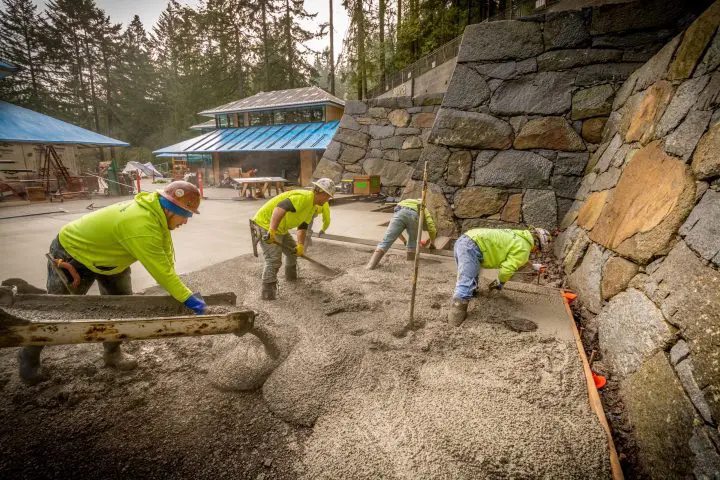
Using techniques passed down from the 17th century, a group of experienced masons worked under the direction of master stone mason Suminori Awata. Although the Garden did hire a translator to assist in this effort, the bulk of the work was accomplished through hand gestures, and the common “language” of stone shared by the key participants.
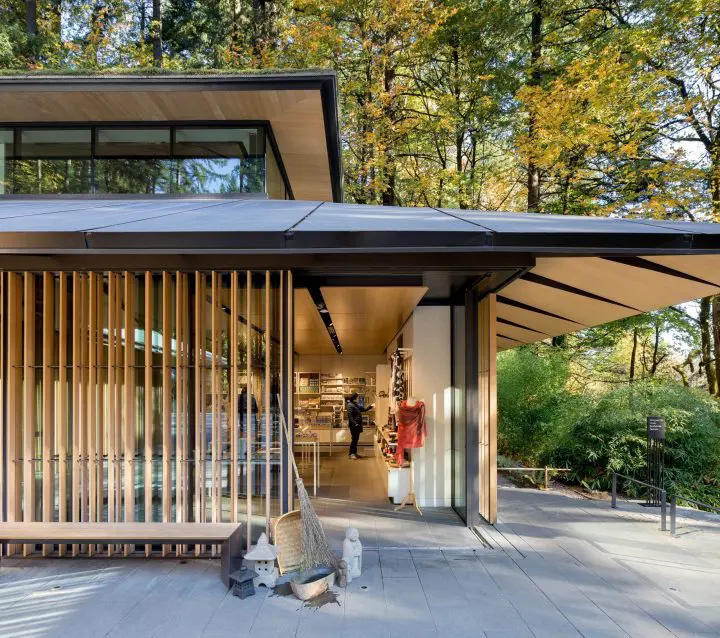
Hoffman stewarded the Japanese Garden expansion project from nuanced vision to elegant reality, in their day-to-day care, as well as their willingness to find solutions together with the entire design team. Hoffman’s team could see that the quality of the work was more than the sum of its architectural parts. Our collaboration was defined by mutual respect, collegiality, friendship, and a strong undercurrent to get things right. This was a journey that could only have been taken together with Hoffman.Balazs Bognar, AIA Partner, Kengo Kuma & Associates
The Quest for Authenticity
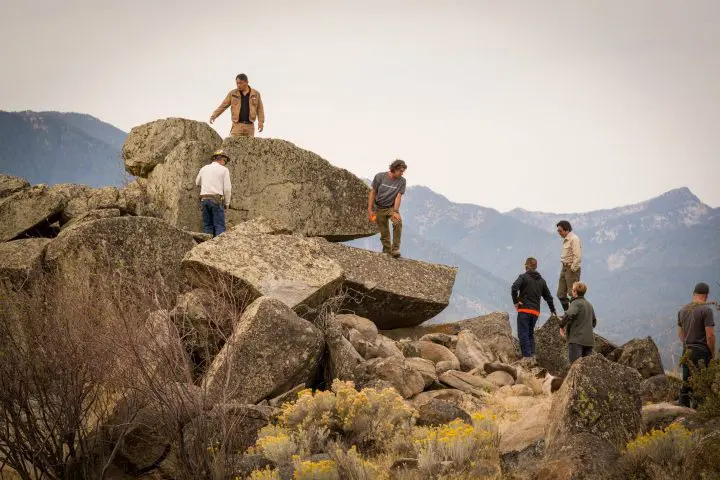
The Garden’s procurement process ventured far outside a typical construction project. For example the massive stones used to construct the 20-foot Japanese castle wall: the rock had to have a specific, weathered look. It wasn’t something that could be ordered from a vendor.
After a lengthy search, the Garden’s Curator, Sadafumi Uchiyama, found the answer in an abandoned quarry in Baker City, Oregon, three hundred miles east of Portland. Large boulders were scattered throughout the site, all covered in moss and scarred from years of exposure. Mr. Uchiyama, along with 15th generation Japanese master stone mason Suminori Awata, hand-selected 800 tons of rock, which was hauled to Portland in 34 flatbed trucks.